
 Entrant
 Student
 Graduate
 Employee
 Courses
 Business partner


Laboratories for evolving the titanium and vanadium technologies for the metallurgy of the future have been opened at Satbayev University
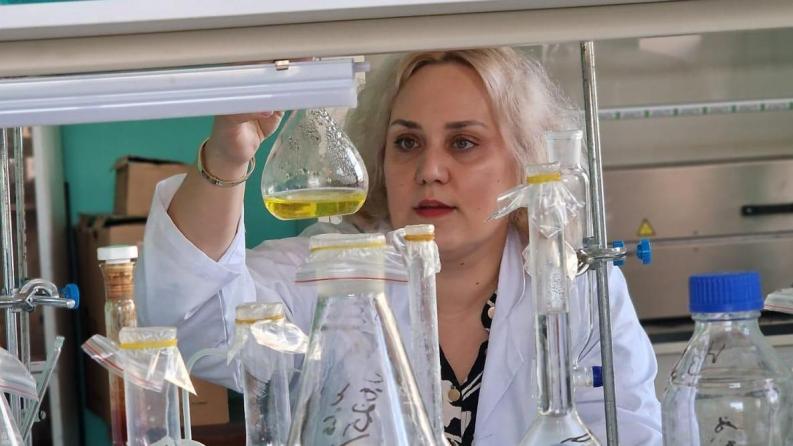
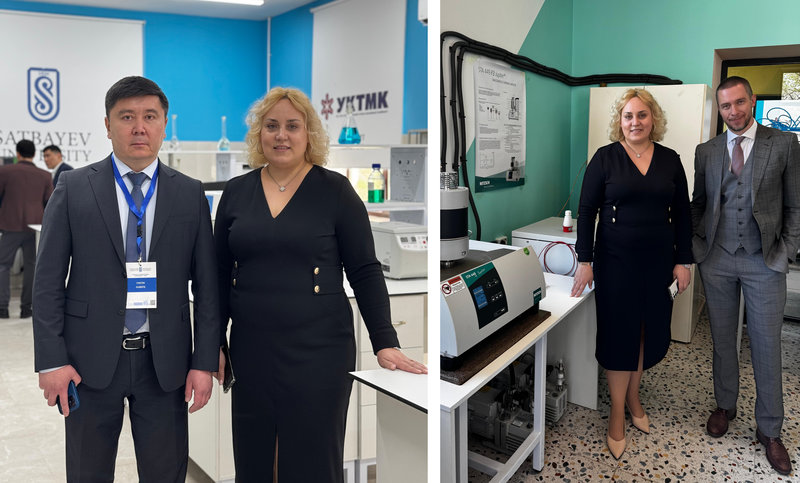
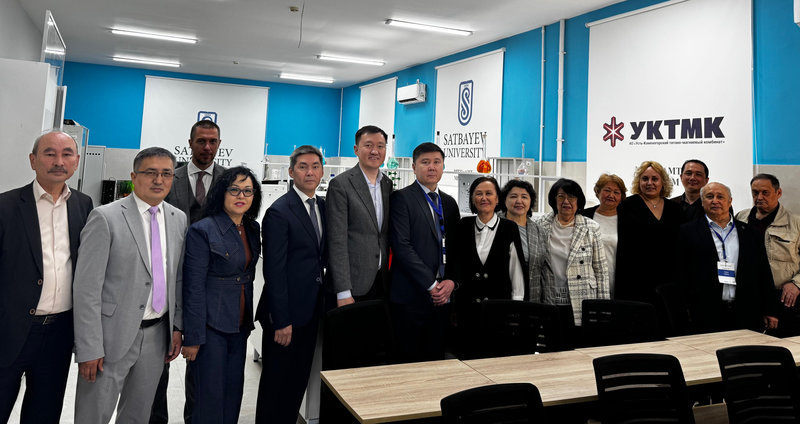
At Satbayev University, evolving the titanium and vanadium industries has been brought to a new level thanks to the unified scientific and technological platform creation: "Laboratories of rare and refractory metals" and "Laboratories of metallurgical processes, heat engineering and powder metallurgy", established within the framework of the engineering center, the scientific director of which is professor Kanai Bakhytovich Rysbekov, MMI’s director. The opening of two laboratories aimed at developing the titanium and vanadium industries made it possible to combine research in the field of raw material processing, elaboration of functional materials and creation of energy solutions, creating a single scientific and technological platform for introducing the advanced technologies and training the specialists for industry. Tatiyana Chepushtanova, the laboratories’ scientific director, professor of “Metallurgy and mineral processing” department, metallurgical engineer, spoke about the new complex and why new laboratories open the doors to the future’s metallurgy for University:
Tatiyana Chepushtanova: The new laboratory complex for the mining and metallurgical industry will act as a link between the university and real production. The first laboratory was opened jointly with Oskemen titanium and magnesium combine, one of the few titanium producers in the world. And the second is in cooperation with “Balaussa” industrial company, which works in processing mineral raw materials sphere, in particular vanadium-containing ores. To solve the real problems of these companies, we have created a single scientific and technological platform that covers the full cycle - from processing raw materials to creating high-tech materials. We hope that the given approach will help bring our industry to the forefront of the global economy.
Question: You have combined these laboratories into a single complex. But how will the research on vanadium and titanium be related?
The answer: These areas are initially closely related, since titanium and vanadium are metals whose future is inseparable from each other and focused on high-tech areas. Titanium is developing towards alloys with a controlled microstructure and guaranteed quality, which is critical for aviation, energy and additive technologies. For example, alloys obtained by triple vacuum-arc re-melting at Oskemen titanium-magnesium combine are used in aerospace engineering, including in the manufacture of aircraft landing gear from Boeing and Airbus companies.
Vanadium, in turn, is becoming a strategic element not only for metallurgy, but also for energy, especially in energy storage systems. The resulting vanadium pentoxide is used as a raw material for metallic vanadium and ferrovanadium, as a catalyst in the production of sulfuric acid, as well as in batteries, electrochemical systems, glass and ceramic industries. All these areas will be covered in the new laboratories.
Question: The laboratories started working quite recently, are there any results yet?
The answer: Yes, the strategic tasks of extracting vanadium from the Balaussa-Uskandyk deposit have already been solved, and vanadium pentoxide has also been obtained from man-made and natural raw materials. For the first time, together with Balaussa, it was possible to extract vanadium from poor ores at a level of up to 99%. In addition, pigments based on iron oxides and ferrites from SSMPPA tailings were obtained for the first time. Contract research is currently underway in the given areas, including the extraction of vanadium and production of iron-containing pigments.
Sultan Yulussov, chief technologist of “Balaussa” hydrometallurgical plant, made a great contribution to this result. Sultan Yulussov developed the technological regulations and, together with his partners, brought the technology to industrial implementation. In general, the project became a continuation of the scientific school of academician Vladillen Alexandrovich Kozlov, a well-known metallurgist, the author of vanadium-manganese sorption technology for obtaining the vanadium from titanomagnetites.
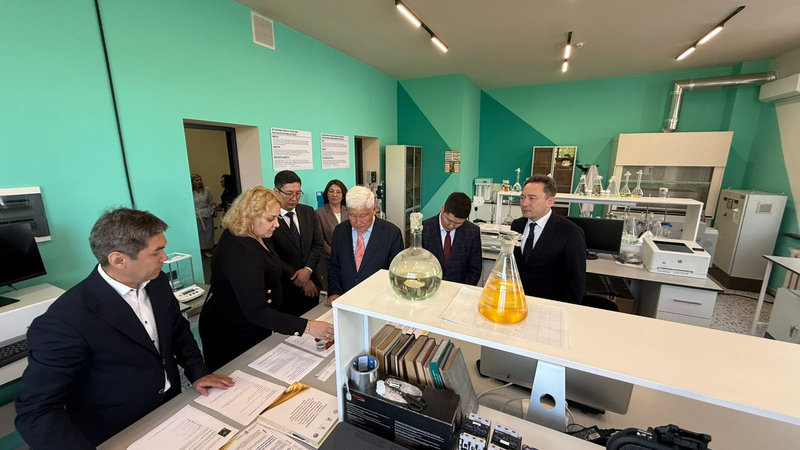
Question: What are the capabilities of the new laboratory complex?
The answer: Very broad. The complex is equipped with modern analytical and technological equipment that allows solving a wide range of tasks, from thermal decomposition and firing to melting in high–temperature, induction and vacuum arc furnaces. The unique installations ensure the determination of thermos-physical properties of materials, alloys and powders, which makes it possible not only to conduct fundamental and applied research, but also to scale developments to the level of industrial implementation.
Contract research is conducted in the laboratories, including the study of titanium alloys of triple re-melting and improving their quality. At the same time, technologies for refining, separating and extracting rare and strategic metals such as vanadium, rhenium and gallium are being advanced. The infrastructure makes it possible to verify the quality of industrial ingots, refine melting modes, and develop additive technologies to produce titanium alloy products with a given architecture.
Question: How do you assess the prospects of the complex for Kazakhstan?
The answer: We believe that combining research in the field of titanium and vanadium forms the basis for evolving the new technological solutions, from materials to energy systems. In the future, this can bring Kazakhstan to the level of the leading industrial and technological centers of the region and the world. In addition, the participation of industrial partners will greatly help scientists not only create technologies, but also immediately test them in real conditions. We would like to thank Oskemen titanium and magnesium combine and personally Assem Mamutova, president of JSC OTMC, as well as Andrey Kuznetsov, CEO of “Balaussa”, for their support in setting up laboratories, developing their infrastructure and training the personnel.
Creation of laboratories strengthens the position of Satbayev University as a center of engineering competencies in the field of metallurgy, where scientific developments are directly transformed into industrial technologies. The new laboratory complex is not just a scientific base, but a platform for solving specific production tasks, improving the efficiency of processing raw materials and developing high-tech metallurgy in our country.
In the long term, the complex will become a growth point for the entire industry, providing a continuous science-production-implementation link and accelerating the introduction of domestic developments to the market. This will not only increase the technological independence and efficiency of processing raw materials, but also form a new generation of engineers and researchers capable of creating world-class solutions for metallurgy, energy and related industries.