
 Entrant
 Student
 Graduate
 Employee
 Courses
 Business partner


The annual "TOM: Almaty" makaton dedicated to engineering solutions for people with disabilities has started at Satbayev University
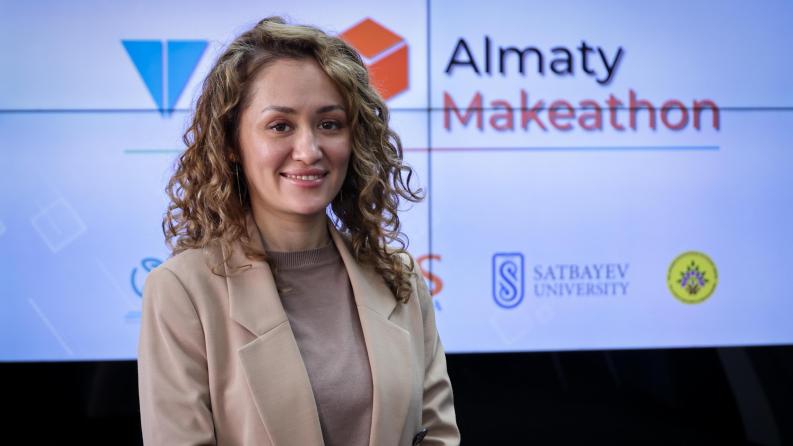
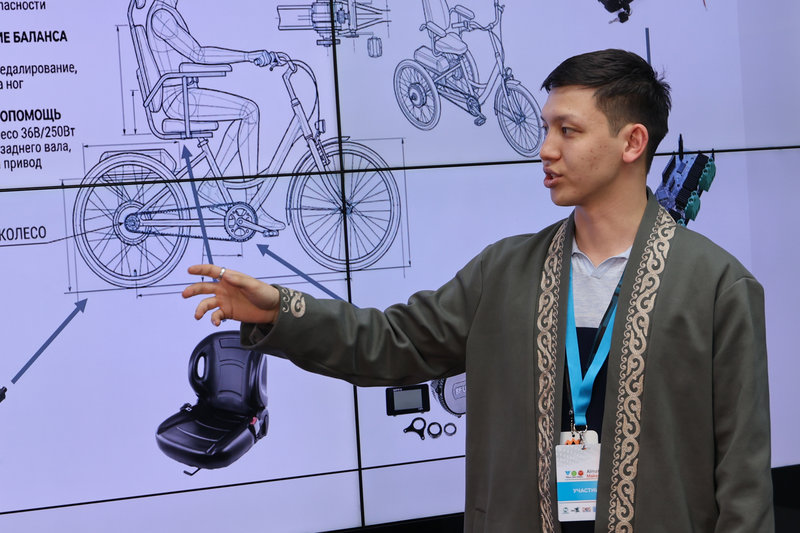
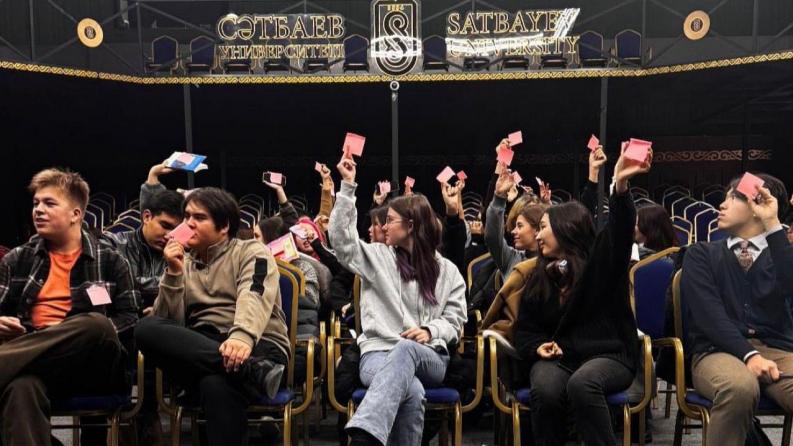
Preparatory stage of the international PreTOM project "TOM: Almaty" has begun at Satbayev University, aimed at developing technological solutions to improve the life quality of people with disabilities. The meeting became a platform for team building and communication between young engineers and people with disabilities. Saniya Arapova, Vice-president of “Association for developing the social technologies”, spoke about the project development and the future possibilities of the initiative.
Question: What is today dedicated to?
Saniya Arapova: Today's day is dedicated to introducing the teams to the so-called "need knowers" - people with disabilities, for whom solutions will be created. Participants study real everyday problems, discuss possible approaches and form the first ideas of future prototypes. Among the participants are creators of all ages and experiences: from schoolchildren to people over 60 years old. These are those who know how to work with their hands, are interested in robotics and mechanics, and at the same time are not indifferent to social tasks. Today, our goal is to create solutions that, on the one hand, will be easy to manufacture, and on the other, will be as useful as possible for people with special needs. It is important that each device is developed not as a universal product, but according to the participant’s individual needs.
Question: What is the key feature of the makaton format and how are the teams working?
Answer: It is based on communication between developers and those who will use their elaborations. There is no place for abstract engineering solutions in the framework of makaton - each invention is created for a specific person. Based on the results of today's communication, the teams will determine what they will be working on. Then, within a month, they will finalize their ideas, prepare a list of necessary materials and think over the process of creating prototypes, which they will assemble during the second stage - a 72-hour marathon. The given preparation process is important because sometimes complex solutions require preliminary preparation, such as printing parts on a 3D printer. Therefore, today can be called the stage when we "sow the seeds" of future developments, which will manifest themselves already at the main stage of the makaton.
Question: Is this not the first time that “TOM: Almaty Makaton” has been held? How does this year's makaton differ from the previous ones and how has the project evolved?
Answer: This makaton differs from the previous ones primarily in its well-developed, optimal model for all participants. Previously, we tried different formats, including trying to create social enterprises and universal solutions, and implement invented solutions as products, but we encountered limitations, both regulatory and related to a narrow target audience. As a result, it became clear that the best approach is targeted, individual solutions that solve the real everyday problems of people with disabilities. Now our task is to scale the given model to the whole of Kazakhstan. Normalization of the topic remains an important task. Such initiatives have not yet become a daily practice. However, ideally, such events should become regular and natural for society.
Question: What can help you implement such an initiative? Can universities help?
Answer: Yes, this is in many ways an institutional issue, the solution of which depends a lot on communication. A person in a difficult life situation may not always be able to independently engage in such processes, or act as an organizer, to form the necessary culture. Therefore, universities, as important social institutions, can become a link between people with disabilities and the engineering community. They are able to act as facilitators, uniting the different groups and directing the potential of students and researchers to solve social problems. We know that students have great potential. The question is, where is it going? In this case, it can be aimed at creating useful and meaningful solutions.
“TOM: Almaty” makaton is an international movement that unites engineers, students, inventors and people with disabilities to jointly develop practical solutions that increase the level of independence and accessibility of the environment. The project implementation contributes to evolving the socially oriented technologies, the involvement of young people in solving urgent social problems and the formation of an inclusive environment. The initiative also contributes to the achievement of sustainable development goals, including quality education, reducing inequality, and promoting innovation in the public interest.
Developing the given initiative is not only about technology, but also about creating a new culture of interaction in which innovations serve specific people and their daily needs. It is expected that the elaborated solutions will not only help specific participants of the makaton, but also become an example of how technology can change people's daily lives, creating a more accessible and inclusive environment in Kazakhstan.