
 Entrant
 Student
 Graduate
 Employee
 Courses
 Business partner


Kazakh scientists have tested a new composite material for next-generation batteries
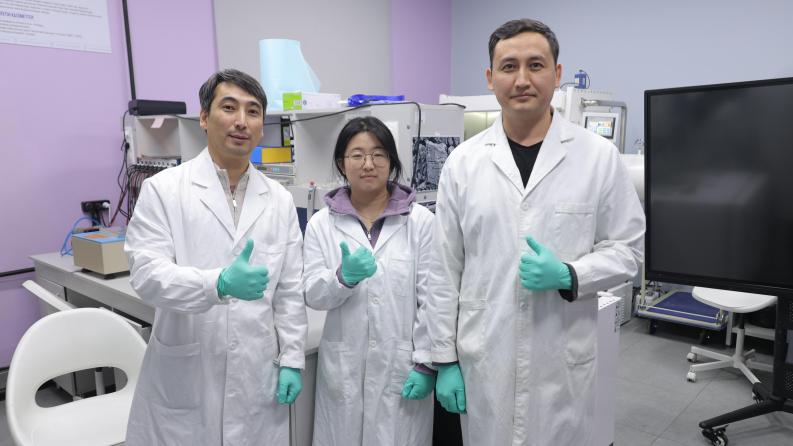
Kazakhstani scientists have conducted research and testing of modified two–dimensional nanomaterials with high electrical conductivity - MXene, designed for use in electrical energy storage devices.
Satbayev University scientists have tested new methods for producing MXene materials, as well as ways to modify them due to silicon and activated carbon. In the study course, the obtained composite materials’ electrochemical characteristics were determined and the comparative analysis of their effectiveness was carried out as well.
Scientists note that the new composite material has a higher specific capacity compared to traditional activated carbon.
"Our development opens up opportunities for improving the efficiency of next–generation electrochemical energy storage devices," said the project leader, PhD Kalizhan Shakenov.
As part of the project, there was created an experimental sample, which passed laboratory tests. University undergraduates and doctoral students actively participate in research work.
The project is currently continuing within the program financing. At the next stage, it is being planned to conduct large-scale tests and put the development into practical use.