
 Entrant
 Student
 Graduate
 Employee
 Courses
 Business partner


A scientific development by Kazakh researchers paves the way for creating new biofertilizers
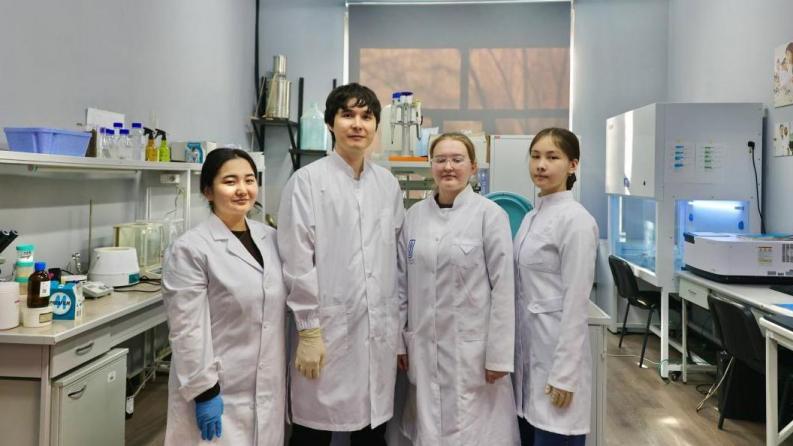
Scientists at Satbayev University have developed a biotechnological method that increases crop yields without the use of chemical fertilizers and pesticides. The solution is based on the creation of a synthetic microbial community – a consortium of beneficial microorganisms functioning as a unified system.
A key drawback of traditional biological solutions lies in their instability. The new development ensures consistent results across different soil and climatic conditions. Tests conducted on irrigated rice fields in the Almaty region demonstrated a 20–25% increase in plant root system mass.
According to the project leader, PhD in Biotechnology Bekzhan Kosalbayev, individual bacterial strains often fail to provide stable performance under varying soil and climate conditions. Therefore, the research team decided to combine several microorganisms into a synthetic microbial community. This combination improves plant mineral nutrition and enhances their resistance to stress and adverse environmental factors.
During the research, the synthetic community FSQN, consisting of four bacteria, demonstrated high efficiency. It showed better performance in challenging soil conditions compared to individual strains. At the next stage, nitrogen-fixing cyanobacteria were added, resulting in the formation of the NFJK synthetic microbial community.
In the traditional agrochemical model, increased yields are often achieved at the cost of soil degradation and water pollution. In contrast, this scientific project opens up opportunities for creating a new generation of biofertilizers and promotes environmentally sustainable crop production.
Currently, Associate Professor of Satbayev University Bekzhan Kosalbayev, together with young researchers, continues this work at a university in the People’s Republic of China. The results have been patented and published in international peer-reviewed scientific journals.