
 Entrant
 Student
 Graduate
 Employee
 Courses
 Business partner


New Horizons in Urban Renewal: PhD Dissertation Defense on Housing Renovation Held at Satbayev University
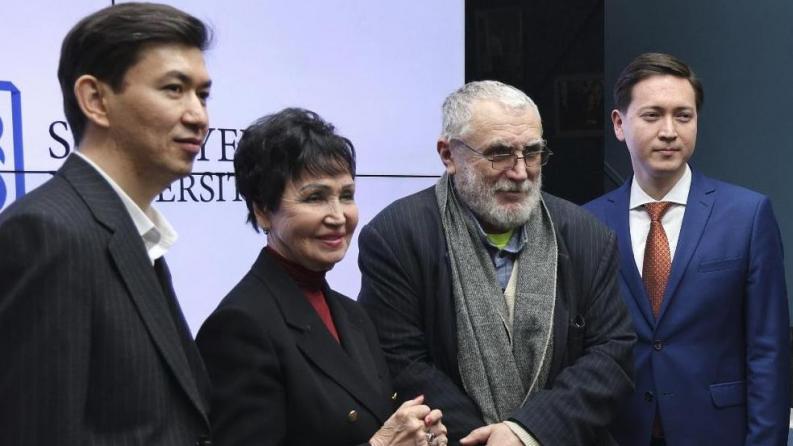
Satbayev University consistently shapes the development of Almaty, influencing the urban environment, architecture, and approaches to sustainable development at multiple levels. The research conducted by the university’s scholars forms the foundation for practical solutions that can transform the city’s appearance and improve the quality of life for its residents. One such example is the dissertation of young researcher Niyaz Sarzhanov, which addresses a strategically important topic for Kazakhstan: “Features of housing stock renovation in Kazakhstan, taking into account various structural building systems.”
The uniqueness of Niyaz Sarzhanov’s research lies in his profound analysis of Kazakhstan’s residential architecture from both the last and the current centuries. The author successfully identified previously hidden aspects of renovation that had long remained outside the scope of scholarly attention. The dissertation proposes specific architectural, planning, and structural solutions that enable a shift from simple repairs to a high-quality transformation of the urban environment.
The research results extend far beyond theory, offering a tangible impact across several levels within the context of the UN Sustainable Development Goals (SDGs): New methodologies allow for a reimagining of mass housing, creating safe, resilient, and aesthetic neighborhoods. Instead of radical demolition, cities gain a science-based regeneration strategy that extends building lifespans and improves the urban ecology SDG 11 – Sustainable Cities and Communities.
The work serves as a ready-made foundation for optimizing utility modernization costs and implementing innovative engineering solutions. The study helps determine the actual renovation potential of various building types, which is critical for national housing and urban planning programs (SDG 9 – Industry, Innovation, and Infrastructure).
Choosing renovation over demolition contributes to resource conservation and minimizes construction waste, representing a significant step toward a circular economy in Kazakhstan’s construction industry (SDG 12 – Responsible Consumption and Production).
The dissertation fills critical gaps in the study of structural resilience of buildings and lays the groundwork for future research in the regeneration of the urban environment. The research findings are already being integrated into the educational process at Satbayev University. Future architects and designers will be trained using relevant case studies that take into account the specific features of housing construction in Kazakhstan.
The successful validation of the results at international conferences has confirmed that the proposed approach meets global standards in architectural science. Niyaz Sarzhanov’s work does not merely highlight existing problems but offers a clear roadmap for creating a new, aesthetic, and sustainable image for our cities.