
 Entrant
 Student
 Graduate
 Employee
 Courses
 Business partner


NATGEO Qazaqstan Satbayev University Club presented a series of master classes by National Geographic researcher Lisa Goldberg
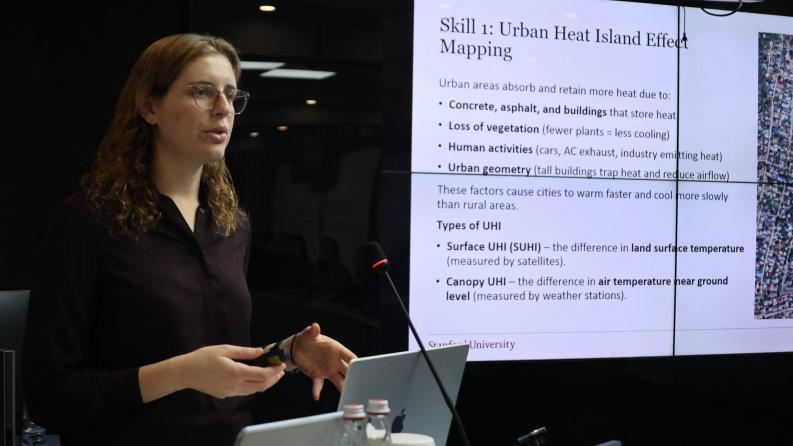
NATGEO Qazaqstan Club, opened last week, began its work with a series of master classes taught by Lisa Goldberg, a researcher at NASA and National Geographic who specializes in studying the global climate change and ecosystems using satellite data and remote sensing.
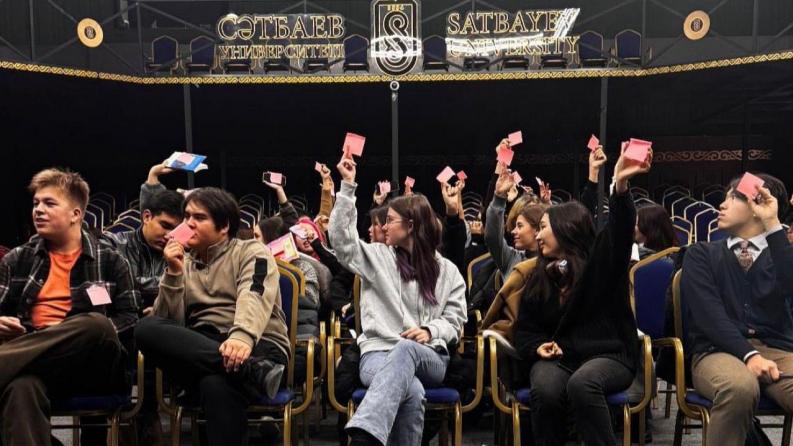
Lisa presented to students and teachers her projects on studying the global climate change using satellite data, as well as practical exercises on mapping urban areas and shared her experience in using satellite monitoring to solve sustainable development problems, showing how modern technologies help visualize environmental problems and build strategies to solve them.
Lisa Goldberg is a young scientist studying for a PhD at Stanford Doerr School of Sustainability. She has been working as an earth scientist at NASA since the age of 14, studying climate change in the regions of South Asia, which are marked by poverty and humanitarian crises. They apply qualitative analysis and remote sensing of the earth using satellites to find ways to strengthen sustainable development in the given regions. Lisa Goldberg is the recipient of the prestigious Young Explorers 2020 Grant from National Geographic, under which she launched Cloud to Classroom initiative, an innovative project that uses satellite imagery to help students better understand global environmental change using remote sensing techniques. Her speech at the NATGEO Qazaqstan club was a vivid example of how scientific research can be involved in the educational process and inspire a new generation of Kazakhstani researchers.
Creating of NATGEO Qazaqstan Club at Satbayev University has become an important step towards forming a community of young researchers who are ready to work with advanced technologies and contribute to understanding the processes taking place on our planet. The new platform has already demonstrated its potential by bringing together students, scientists and experts around current scientific challenges and opening up new prospects for international cooperation.